

How to Choose a Wholesale Fruit and Veg Supplier in London
Choosing the right wholesale fruit and veg supplier is one of the most consequential decisions a food hall buyer, farm shop owner, or independent grocer will make. Get it right and your displays are consistent, your customers notice, and your margins are easier to manage. Get it wrong and you spend more time firefighting supply issues than running your business.
This guide covers the six things worth examining before committing to a supplier, drawn from over 30 years of working with trade buyers across London.
Start With the Market — Where Your Supplier Sources From Matters
London has more than one wholesale produce market, and they are not all equivalent. The market a supplier operates from determines how early they can buy, which growers they have access to, and how quickly produce moves from harvest to your door.
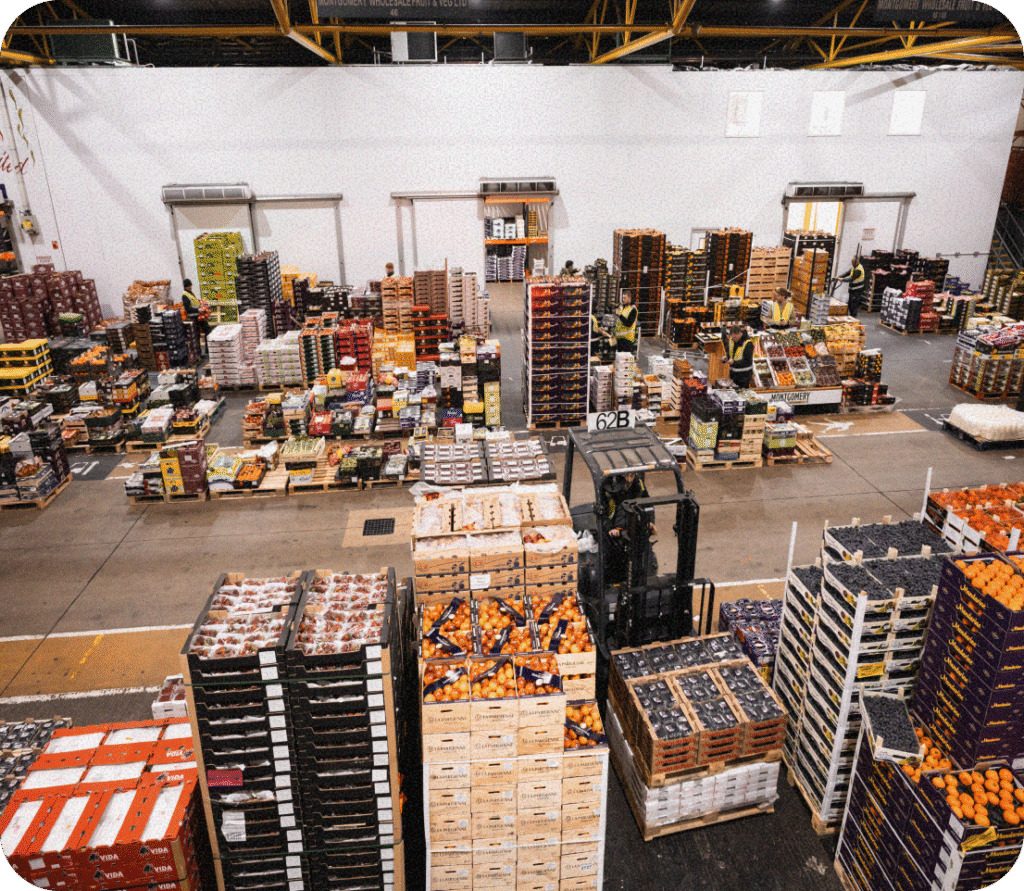
Montgomery Wholesale operates from New Spitalfields Market in east London, one of the UK’s principal wholesale produce markets, handling significant daily volumes of fruit and vegetables from British growers and trusted importers. Buying at dawn, directly from the market floor, means produce travels the shortest possible route before it reaches your counters.
When evaluating any supplier, ask where they source from, what time they buy, and how long the cold chain is between purchase and delivery to you. These are not abstract questions, for perishable produce, the answers directly affect shelf life and display quality.
Look for a Fruit & Veg Supplier Who Understands Your Retail Format
Restaurant supply and retail supply are fundamentally different. A kitchen needs produce that performs when cooked; a farm shop or food hall needs produce that looks outstanding on a counter for six to eight hours, holds its appeal across the trading day, and gives customers a reason to pick it up.
That requires a different kind of grading, different pack formats, and a supplier who thinks in terms of display life and shelf appeal, not just unit cost. Before committing, ask whether the supplier actively works with businesses like yours. Ask to see how produce arrives: is it crate-ready for fast merchandising, or will your team spend an hour re-grading every delivery?
A supplier who genuinely understands retail formats will have clear answers to both of those questions.
Delivery Reliability Is Non-Negotiable
Fresh produce does not wait. A supplier who misses a delivery window, delivers in the wrong condition, or cannot scale up at peak periods will cost you more than their prices save. Reliability is the single most important operational criterion when choosing a wholesale supplier in London.
Before committing, establish the following: what are the delivery windows and are they time-banded to your trading schedule? How is the cold chain maintained between market and your door? What happens at Christmas, Bank Holidays, or periods of high demand, can they guarantee the same level of service?
At Montgomery Wholesale, next-day delivery is available across London, with routes and timing built around the requirements of retail and food hall operations. For full details on coverage and charges, see our delivery information.
Range Depth — Everyday Staples and Specialist Lines
Volume lines such as potatoes, carrots, onions, salad leaves keep the business running. But specialist and seasonal lines drive footfall, support premium pricing, and give your display a point of difference that customers remember.
A good wholesale supplier covers both without requiring you to source from multiple places. This means reliable everyday availability alongside lines that create a story on your shelves; the specialist citrus arrivals in January, the first English asparagus of the season, the heritage tomato variety that your food-savvy customers will seek out by name.
Ask any prospective supplier how they handle specialist and seasonal lines. Do they source proactively, or reactively? Do they alert you to what’s coming in before it arrives? The answer tells you a great deal about the quality of the relationship you will have.
Experience and Market Knowledge You Can Actually Use
There is a meaningful difference between a supplier who can tell you what is available today and one who can tell you what will be available in three weeks, why a particular line is running short, and which alternative is worth considering in its place. That kind of knowledge comes from sustained presence in the market, not from a price list.
Montgomery Wholesale has traded for over 30 years as a fourth-generation family business at New Spitalfields Market. That heritage is not decorative, it means our buying team knows the seasonal rhythms of produce in a way that takes decades to develop. We know when to secure volume early before supply tightens, and when to hold off because quality will improve in a fortnight.
When you are evaluating a supplier, ask them about the season ahead. If they can speak fluently about what is coming, what is going, and what the quality picture looks like over the next month, that is a strong signal. If the answer is vague, it should give you pause.
Six Questions to Ask Before You Commit
Before opening an account with any wholesale fruit and veg supplier in London, work through this checklist:
What is your minimum order value?
Make sure it fits your weekly volume, particularly in quieter trading periods.
Confirm your postcode is within their standard delivery area, not subject to additional charges or restrictions.
Online portal, phone, email, WhatsApp; know your options and how late you can adjust.
Direct relationships matter more than you might expect when you need something quickly or something goes wrong.
Weather events, grower shortages, and import delays are part of wholesale produce. Ask how they communicate issues and what they do about them.
A supplier who works well with farm shops or food halls will be able to point you to customers in the same sector.
Stay Ahead of the Market
If you found this guide useful, our monthly market report goes further. Subscribers get it straight to their inbox every month, covering what’s just arrived, what’s coming into season, and what’s about to disappear. It is the simplest way to stay ahead of the wholesale market and keep your range looking its best.
