

A Farm Shop Owners Buyer’s Guide to Procuring Fresh Produce
Running a farm shop is not as simple as ordering some stock from a whole trader and selling it, there’s an art to it. Farm shops need to consider two crucial things – looking for local, seasonal produce and the hard reality of procurement. Your customers likely come to you for your brand ethos whether that be about short supply chains, honest provenance, high-quality fresh produce, or all of these. As a business you want to deliver high-quality produce consistently, which means that the decisions you make in sourcing, supplier vetting, and stock management are far more important than what most farm shop owners realise.
This buyer’s guide sets out the key decisions involved in procuring fresh produce for farm shops, looking at from where should buy and who you should vet.
Where should Farm Shops Source From
The first and most fundamental question in fresh produce procurement is where your supply actually comes from. For farm shops, there are two routes that can be taken, either via direct relationships with growers, or buying through a wholesale market.
Direct to Grower
This is appealing to farm shop owners for obvious reasons. You know exactly who grew your produce, where it came from, and when it was harvested. For certain produce, e.g. locally grown salad leaves, soft fruit, heritage root vegetables; a direct grower relationship can make all the difference. It gives you a story to tell, first-name familiarity with the person who grew the food, and often a level of quality and variety that not all wholesale markets can replicate.
The limitations are equally obvious. A single grower can only supply what they grow, in the volumes they produce, at the times their crops are ready. Any gap in their production becomes a gap in your display. Additionally, reliability can be harder to guarantee, and the administrative overhead of managing multiple direct relationships, each with their own ordering systems, minimum requirements, and delivery arrangements can add up quickly.
Wholesale Market Sourcing
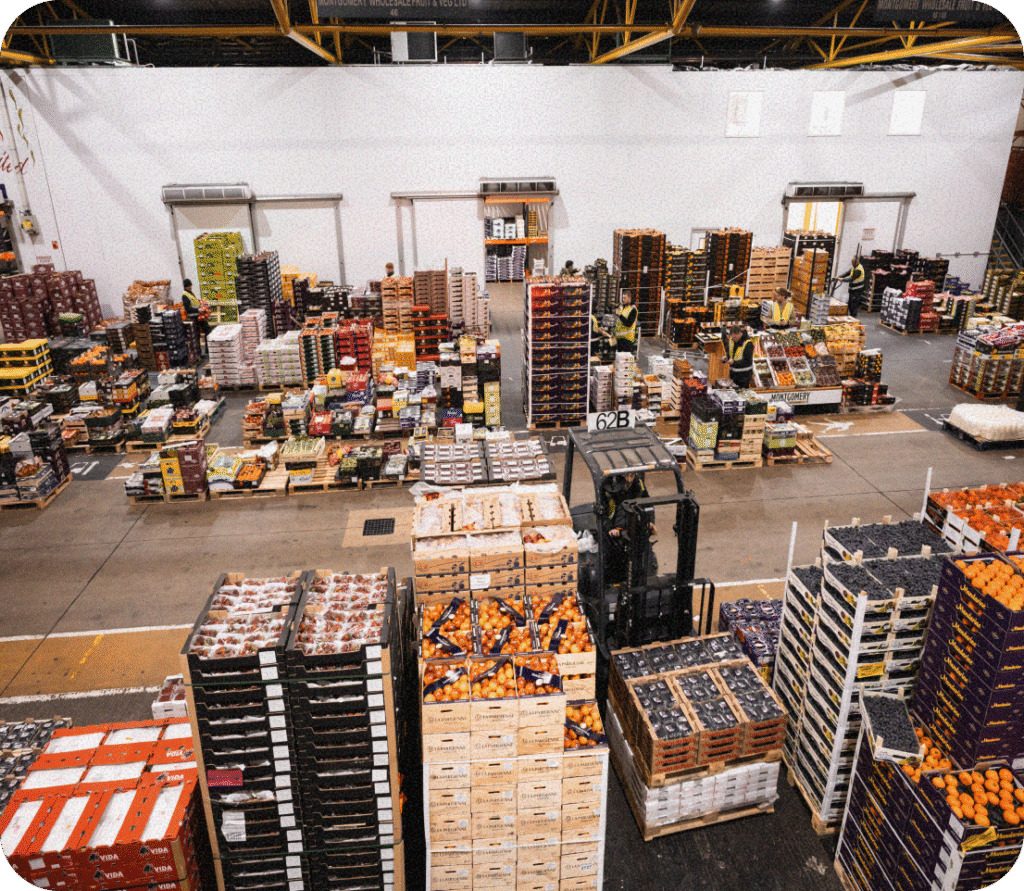
Through a well-connected supplier, solves for most of those limitations listed above. A supplier operating from a major wholesale market has access to a far broader range of produce, they can source across multiple growers for any given product, and can flex volume to meet your needs week to week. The cold chain is typically well-managed, produce moves quickly, and the supplier carries the burden of relationships with dozens of growers on your behalf.
For most farm shops, the answer is a combination of both. Direct grower relationships for the produce where provenance is central to your offer, and where you can genuinely vouch for the person behind the product. Wholesale market sourcing, through a trusted specialist supplier, for everything else.
How you should be vetting your supplier
Not all wholesale suppliers are the same, and the differences matter considerably when your business depends on display quality. A farm shop counter lives or dies based on how produce looks at eleven in the morning, five hours into trading. That means grading standards, pack formats, and handling at every point of the supply chain have a huge impact on your margins and your reputation.
When vetting a wholesale supplier, these are the questions worth asking.
- How is produce graded? – Class I and Class II gradings exist for a reason, but within those bands there is significant variation. A supplier who grades for retail display, selecting for visual consistency, absence of blemishes, and suitability for counter merchandising will be different from one who grades primarily for wholesale catering. Ask them directly: do they supply farm shops and food halls? If so, ask to see a reference from one. The produce arriving at a restaurant kitchen is forgiven for things that a farm shop display is not.
- What do deliveries actually look like? – Ask whether produce arrives crate-ready, sorted for quick merchandising, or whether your team will need to regrade and re-sort on receipt. Time spent rehandling a delivery is time not spent serving customers, and produce handled more frequently than necessary deteriorates faster.
- How is the cold chain maintained? – Temperature control between the wholesale market and your door must be considered. As it is one of the biggest determinants of shelf life. A supplier who buys early morning at the market and delivers in refrigerated vehicles, completing routes within a few hours, will give you produce that performs differently to one running warmer, slower logistics.
- What is their returns and credits policy? – Even with excellent suppliers, issues arise. Knowing in advance how claims are handled, and whether a supplier stands behind their quality with a straightforward resolution process is a key indicator to show how they operate and indicates the confidence they have behind their produce.
What Should the Supply Chain and Inventory Management Look Like
Fresh produce is one of the most demanding categories in retail inventory management. The margin between under-ordering and waste is narrow, and getting it wrong in either of these costs money. Over time, good procurement is less about individual buying decisions and more about building the systems and supplier relationships that make consistent stock management possible.
A few principles are worth establishing early.
- Order to your trading pattern – It is tempting to over-order on lines that feel important to the offer, and to assume a busy weekend will sell more than it does. Building a clear picture of weekly throughput by produce, and reviewing it regularly against wastage, gives you a good baseline to work from.
- Use your supplier as a planning resource – A good wholesale supplier will know what is coming into season, when supply is likely to tighten, and which produce are worth securing volume on ahead of a price movement. If your supplier is not proactively sharing that kind of intelligence, you may not be getting the full value of the relationship and it may be time to build some new connections.
- Build in flexibility for seasonal and weather-driven disruption. British growing conditions mean that supply of domestic lines can shift quickly. A supplier with broad market access can switch between sources when a line is disrupted; one dependent on a single grower cannot.
- Think about minimum order values and delivery frequency. Ordering daily gives you maximum freshness but minimum consolidation. Ordering twice weekly may suit your volume better and reduce handling. Farm shop owners need to work out what makes operational sense for your shop, and make sure your supplier’s minimum order thresholds fit around it rather than driving unnecessary overstock.
Ready to upgrade your fresh produce procurement with Montgomery Wholesaling?
For farm shops in and around London, the logical partner for fresh produce procurement is a specialist wholesale supplier operating from a central hub wholesale market. Montgomery Wholesale has supplied farm shops, food halls, and independent retailers since 1981, and is based in the central hub Spitalfields Market.
Our buying team is on the market floor in the early hours carefully selecting produce that meets retail display standards and building the kind of grower relationships that support provenance conversations with your customers. If you are reviewing your fresh produce procurement, or looking for a supplier who understands the specific requirements of farm shop retail contact us today and open a trade account to get high-quality produce for your farm shop.
Phone: 020 3833 9174
WhatsApp: 020 3833 9174
